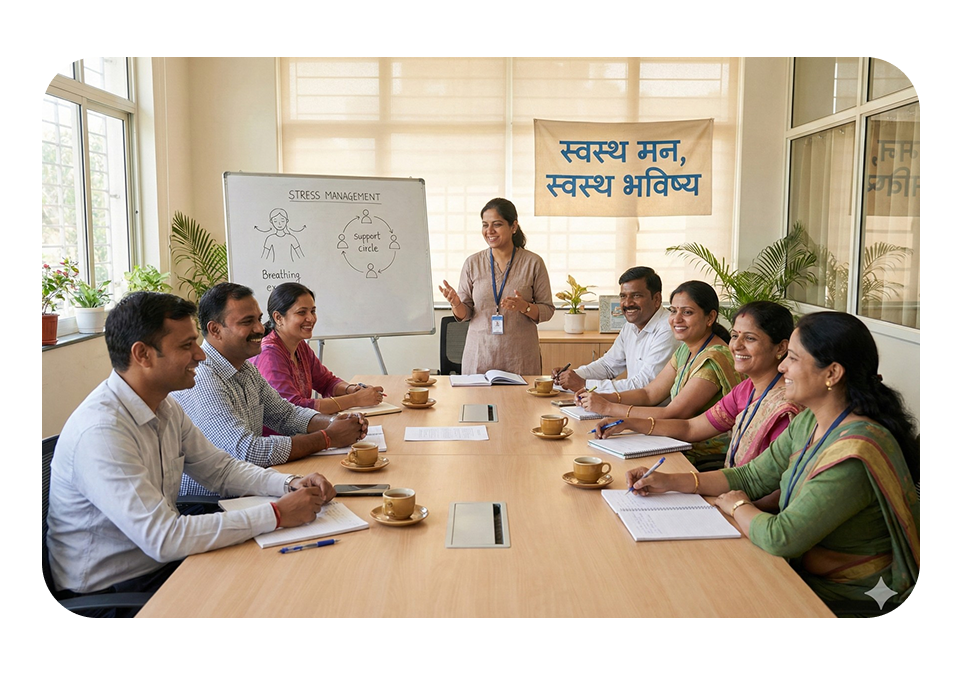




Mission Margdarshan : Building Career Guidance Ecosystems in Schools
October 6, 2025
Career Counsellor Journey For Beginners
October 6, 2025
In a world where career options are growing quickly, waiting until the final years of school to think about the future can make students feel overwhelmed and unprepared. By the time students reach higher secondary or graduation, they are expected to make important choices about subjects, courses, or career paths. Without proper guidance, many feel pressured to choose based on parents, peers, or societal expectations instead of from self-awareness.
Early career guidance changes this situation completely. By introducing structured career preparation in the formative school years, schools and parents can help young learners explore their interests, build essential skills, and plan for a meaningful future.
Why Career Guidance Should Start Early
Building Awareness and Exposure
Most children grow up with limited knowledge of different careers, often shaped by their immediate surroundings or popular media. Early career guidance broadens this perspective. By showcasing various industries, roles, and new opportunities, students can look beyond traditional options and envision futures that connect with their strengths and passions.
Encouraging Skill Development
When career preparation starts early, students have time to develop skills that will benefit them throughout life. Important skills like communication, problem-solving, and creativity can be nurtured gradually. This long-term approach ensures they enter the workforce with competence and confidence.
Reducing Confusion During Key Transitions
One of the most stressful times for students is during academic transitions, such as choosing streams in high school or deciding on college courses. Early exposure to psychometric insights and guided exploration means these decisions are based on information rather than impulsive choices. Students already have a sense of their strengths and interests, making these critical moments less intimidating.
Reducing Career Anxiety
Career uncertainty can cause anxiety. Students who receive structured guidance from an early stage feel more secure in their choices. Rather than second-guessing themselves or giving in to outside pressures, they can move forward with clarity. This boosts their confidence and supports emotional wellbeing by lowering stress around decision-making.
The Role of Early Career Guidance in Student Career Preparation
The effects of early guidance go beyond the students; it benefits parents and schools as well. For students, it offers direction, helping them stay motivated and focused on their goals. Parents, often facing challenges in balancing aspirations with practical realities, gain reassurance from structured insights instead of relying only on instinct or social comparisons.
For schools, integrating early career guidance into the educational journey improves overall student outcomes. It enhances the school’s reputation for providing a well-rounded education, showing that it prioritizes both academic excellence and real-world readiness.
Practical Ways to Introduce Early Career Guidance
The good news is that schools and parents don’t have to wait until students are about to take board exams to start this process. Here are some practical approaches to naturally integrate guidance into early learning years:
Psychometric Assessments : Starting in middle school, scientifically designed tools can offer objective insights into abilities, interests, and personality. At this stage, students begin developing clearer self-awareness and cognitive maturity, making it an ideal time to explore their strengths and preferences. This helps create a solid foundation for informed decision making later.
Workshops and Counseling Sessions: Regular career talks, interactive workshops, and mentoring opportunities encourage curiosity and provide students with direct exposure to different career fields.
Project-Based Learning: Hands-on projects let students explore real-world applications of their skills and interests. For instance, a student who loves science might enjoy conducting simple experiments, while another who is drawn to design could thrive in creative challenges.
Parent Involvement: An essential element is guiding parents to support their children. When parents switch from making decisions for their kids to encouraging exploration, the entire career preparation process becomes healthier and more empowering.
Conclusion
Early career guidance isn’t about locking children into choices too soon, it’s about giving them the space, support, and confidence to explore who they are and what they might become. As students grow, their interests and strengths evolve, and so should the guidance they receive. By starting early, nurturing awareness, and building essential skills over time, we help them approach the future with clarity rather than confusion. Success then becomes a journey shaped with purpose, supported by parents, guided by schools, and ultimately steered by the students themselves.